
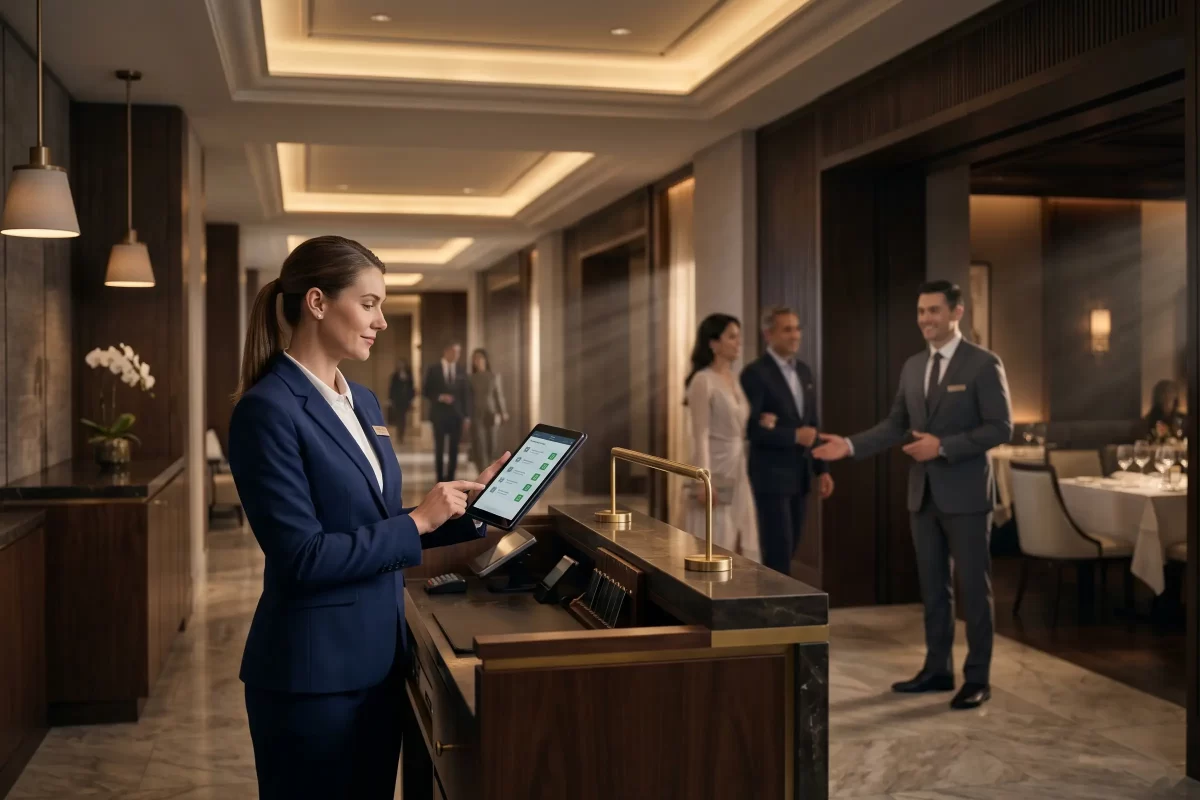
There is a dangerous trap that hospitality owners and general managers fall into: the “Hero Operator Syndrome.” When you are in the building, the property runs like a Swiss watch. You catch the missing garnish on the expo line before the plate leaves the kitchen. You notice the smudge on the lobby glass and direct the porter to clean it. You step in to de-escalate a frustrated guest at the front desk before the situation requires a comped room. Because you are hyper-vigilant, the operation succeeds. But the moment you take a weekend off, or even just step out for a vendor meeting, the standards plummet. Ticket times skyrocket, rooms are marked clean when they are missing towels, and the guest experience degrades rapidly.
If your property only functions properly when you are physically present to micromanage every touchpoint, you do not own a scalable asset; you own a high-stress, low-margin job. The core issue is that your business is running on “tribal knowledge” rather than engineered, institutionalized standard operating procedures. The rules of engagement, the quality thresholds, and the crisis management tactics exist solely in your head.
When your staff lacks a comprehensive hotel operations playbook (which must fundamentally include a fully integrated F&B operational playbook), they are forced to guess. In the high-pressure environment of hospitality, an unguided employee will always choose the path of least resistance. A housekeeper will skip vacuuming under the bed to save two minutes. A restaurant server will fail to course out a meal properly to save a trip to the POS terminal. This is not malicious behavior; it is the natural byproduct of operational ambiguity. Without a rigid, easily accessible framework that outlines exact expectations, you strip your team of the ability to self-manage. To achieve true “Invisible Efficiency,” you must transition your business from a personality-driven operation to a process-driven machine that relies on staff autonomy in hospitality.
Actionable Solutions (The “How-To”)
Building a playbook does not mean writing a 300-page corporate manual that no one will ever read. As a hospitality operations consultant, I engineer systems that are built for the reality of the floor. Your playbook must be a dynamic, highly visual tool. Here is the framework to build an operational system that works flawlessly in your absence.
Phase 1: Visual, Not Verbal Standards
The human brain processes images exponentially faster than text. If your standard for a clean room or a set table is described in three paragraphs of text, it will be ignored. You must digitize and visualize the standard.
- The Hotel Playbook Example: Do not write, “Ensure the bathroom amenities are placed neatly.” Take a high-resolution photograph of the perfect bathroom vanity. Place a laminated copy of that exact photograph on the housekeeping cart, and load it into your digital hospitality management systems. The instruction becomes binary: “Make the vanity look exactly like this picture.”
- The Restaurant Playbook Example: Do not write, “Set the table for dinner service.” Create a visual diagram or a photograph of the perfect 4-top table setting, showing the exact distance of the fork from the table edge and the precise fold of the napkin. Post this visually at the server station. When the closing manager audits the floor, they are simply comparing the physical table to the master photograph.
Phase 2: The “If This, Then That” Decision Matrix
Staff paralysis happens when an employee encounters an exception to the rule and does not know what they are authorized to do. Your playbook must remove the hesitation by mapping out specific crisis scenarios.
- The Hotel Playbook Example: An overbooking situation occurs at 10:00 PM, and you are not answering your phone. Without a playbook, the front desk agent panics, leading to a disastrous confrontation with the guest. With a playbook, they turn to the “Walk Policy Matrix.” It explicitly states: IF a guest is walked, THEN: 1. Secure a room at our specific partner property. 2. Pay for their transportation. 3. Authorize up to $150 in F&B credit for the inconvenience. 4. Log the incident using the ‘Walked Guest’ POS code. The agent acts with Marriott-level discipline, solving the problem instantly.
- The Restaurant Playbook Example: A VIP guest loudly complains that their steak is overcooked. The server cannot find the manager. The restaurant SOPs matrix dictates: IF a dish is sent back, THEN: 1. Apologize immediately without defensiveness. 2. Remove the plate and notify the Expo directly. 3. The server is pre-authorized to offer a complimentary round of drinks or a dessert without requiring a manager’s POS swipe. This empowers the server to save the guest experience in real-time.
Phase 3: The Check-the-Checker System
A playbook is useless without enforced accountability. You must build verifiable friction into the end of every shift so that employees cannot clock out until the standard has been demonstrably met.
- The Hotel Playbook Example: Implementing a digital checklist for the housekeeping supervisor. The supervisor cannot just blindly approve a room. The playbook requires them to use a digital inspection app to physically take a timestamped photograph of the cleared AC filter and the restocked mini-bar before the PMS (Property Management System) flips the room status to “Clean and Ready.”
- The Restaurant Playbook Example: The kitchen closing checklist. The closing line cook cannot simply sign a piece of paper saying the low-boy refrigerators are wiped down. They must complete a digital line check that requires inputting the actual temperature reading of each refrigeration unit into the system before the kitchen is officially closed. If the temperature is above 40 degrees, the system alerts the off-site owner immediately.
Phase 4: Cross-Training and Labor Flexing
When you are not there, call-outs and sick days can derail an entire operation. A robust playbook outlines exactly how the remaining staff absorbs the shock of missing personnel.
- The Hotel Playbook Example: The night auditor calls out sick. The playbook must contain a “Night Audit Protocol” that is simplified and actionable enough that the PM Front Desk Supervisor can execute the end-of-day financial rollover without your intervention. This requires step-by-step, screen-recorded video tutorials stored on the property’s secure tablet.
- The Restaurant Playbook Example: The dedicated dishwasher walks out mid-shift. The playbook dictates the “Code Red Labor Shift.” It explicitly outlines that the prep cook immediately takes over the dish pit, the expo absorbs the final plating duties, and the host pauses seating for 10 minutes to allow the kitchen to catch up. Everyone knows their backup role before the crisis ever happens.
Common Pitfalls to Avoid
Operators routinely sabotage their own efforts to systemize their businesses by falling into these operational traps:
- The 200-Page Dust Collector: Writing a massive, text-heavy manual, printing it, putting it in a heavy binder, and leaving it in the back office. If the playbook does not live on the floor, on digital devices, or in the immediate sightline of the staff, it does not exist.
- Punishing Adherence Over Outcome: If an employee perfectly follows the playbook matrix during a crisis, but the guest still leaves unhappy, you cannot reprimand the employee. If you punish staff for following the rules, they will immediately revert to rogue, self-protective behavior. You must praise the adherence to the standard, and then revise the playbook to fix the outcome.
- The “Set It and Forget It” Mentality: Operations are living organisms. Menus change, hotel amenities upgrade, and software updates alter workflows. If your playbook is not reviewed and updated quarterly, it becomes obsolete, and staff will quickly lose faith in its relevance.
- Failing to Audit the Playbook Itself: Owners often assume the systems are running perfectly just because the doors are open. You must occasionally run “stress tests” or blind audits to ensure the staff is actually utilizing the digital checklists and not just pencil-whipping the data to get home faster.
Apply This Tomorrow (15-Minute Action Plan)
You cannot build a comprehensive operational framework in one day, but you can stop the bleeding immediately. Execute these immediate steps tomorrow to begin reclaiming your time:
- The “Three Picture” Standard: Grab your phone and take exactly three photographs tomorrow: one of the perfectly arranged front desk/host stand, one of a perfectly plated high-margin dish, and one of a flawlessly made hotel bed. Print these in color, laminate them, and tape them to the exact workstations where the tasks are performed.
- Mandate the “One Crisis” Post-Mortem: Look at the single biggest operational failure that happened during your last days off. Was it a blown restaurant reservation? A dirty hotel room? Write down the exact step-by-step procedure of how it should have been handled. Hand this single-page protocol to your shift supervisors tomorrow and mandate its use.
- Audit the POS Voids: Pull the void and comp report from a shift you did not work. Identify any generic “Manager Comp” codes. Tomorrow, inform the staff that generic comp codes are permanently disabled. They must write a one-sentence explanation for every void. This forces the staff to start documenting the operational failures that happen when you are not looking.
- Record One Workflow: Instead of explaining how to perform a task (like rolling silverware or restocking the coffee station) for the hundredth time, film your most efficient employee performing the task perfectly. Narrate the video explaining why it is done this way. Upload it to a shared drive. You have just created the first page of your digital playbook.


